
May 7, 2026
What April Taught Us About Panama's Bitcoin Moment
April’s Bitcoin news in Panama revealed both promise and friction. Bitcoin Day Panamá 2026 brought banks, builders, regulators, investors, and the community into the same conversation, while P2P trading issues showed why legal clarity and banking access still matter.
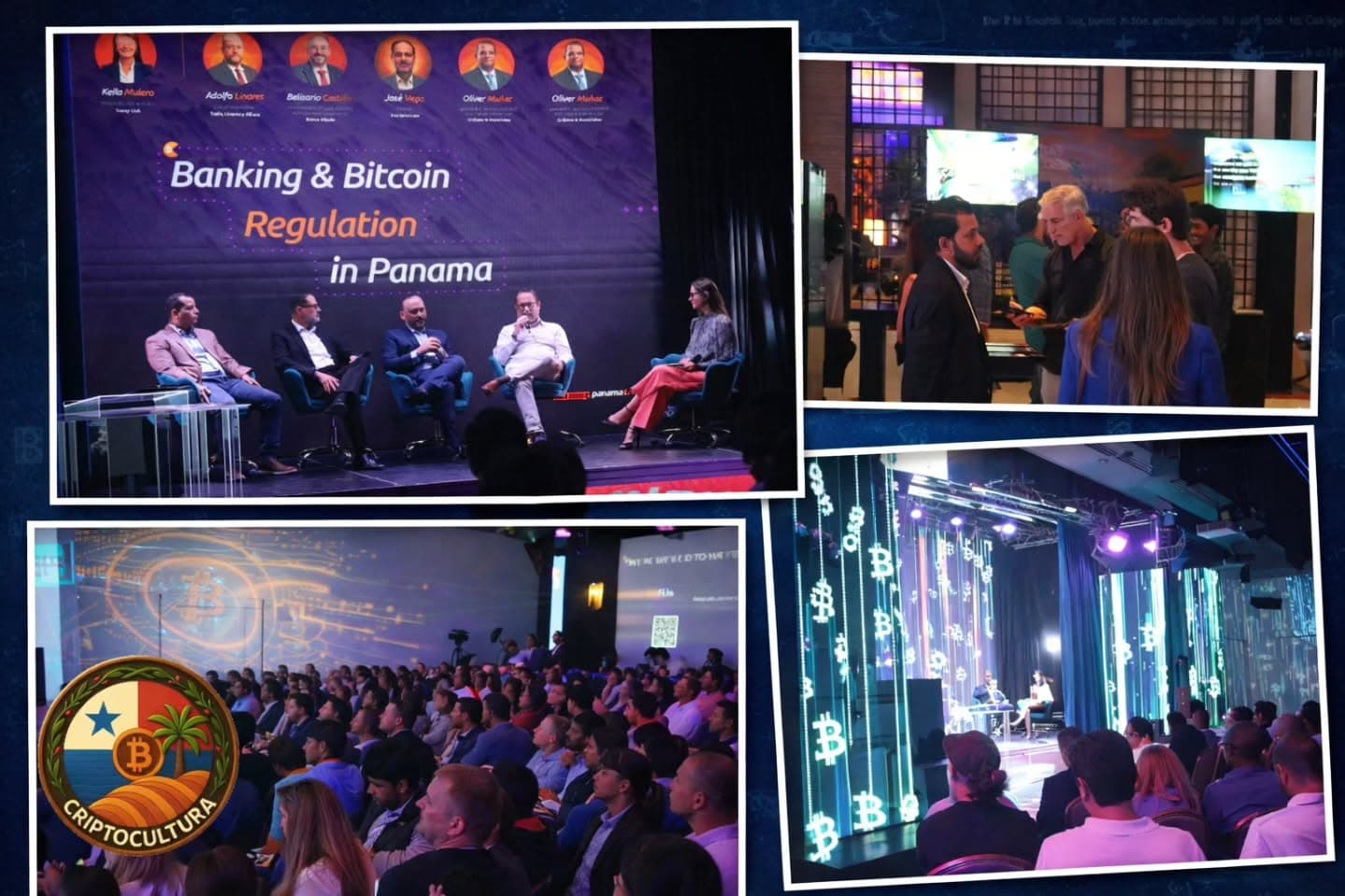
April made Panama's Bitcoin conversation feel less abstract. The work in front of us is practical: banking access, legal clarity, education, custody, and compliance. Those topics can sound dry until they are the things stopping people from building.
That is exactly why we organized Bitcoin Day Panamá 2026.
We did not want another event where Bitcoin is treated like a price chart with a stage. Panama has a different question in front of it. Can a dollarized, trade-oriented, internationally connected country become a serious home for Bitcoin companies, investors, builders, and communities? We think it can. But April also showed why that will not happen by accident.
The Friction Is Already Here
On April 3, CriptoNoticias published one of the most important Panama crypto stories of the month: "Bancos y Fiscalía complican el negocio P2P de criptomonedas en Panamá".
The article described the pressure facing local peer-to-peer crypto traders: frozen bank accounts, Fiscalía investigations, and little room to explain context when a transaction is later linked to fraud. CriptoNoticias called it a "crisis de confianza" for the local Bitcoin and crypto market.
That phrase stayed with us.
This is not a theoretical policy debate. People in Panama already use Bitcoin, stablecoins, and platforms like Binance P2P to move between digital assets and dollars. The problem starts when the banking and legal systems cannot easily distinguish between a legitimate operator and someone caught at the end of a fraudulent payment chain.
CriptoNoticias quoted P2P trader Jonatan Arosemena saying he had been called to the Fiscalía after receiving transfers from people who had allegedly been victims of identity theft. Whether you are a regulator, a banker, a lawyer, or a Bitcoiner, this should bother you. A market cannot mature if legitimate actors are treated as disposable shock absorbers for risks they did not create.
This is the hard part of Bitcoin adoption. It is not the slogan. It is the interface with banks, prosecutors, compliance teams, and courts.
Why Bitcoin Day Panamá Had to Happen
Ten days after the CriptoNoticias report, DiarioBitcoin covered Bitcoin Day Panamá 2026, describing the event as a meeting point for entrepreneurs, banks, regulators, investors, and the Bitcoiner community.
That was the point.
We wanted the people who normally talk past each other to sit in the same room. Bitcoin builders need to understand banking risk. Banks need to understand how lawful Bitcoin activity actually works. Regulators need better technical context. Investors need to hear where the opportunities are, but also where the friction is. And the community needs a serious forum that is not reduced to hype.
DiarioBitcoin quoted organizer Juan Kong saying that "Panamá tiene una oportunidad real" to become a meeting point for Bitcoin conversations in the Americas. We believe that. Panama has a dollarized economy, a regional financial role, a service culture, a history of connecting markets, and a legal community used to international business.
But none of that is enough by itself.
A Bitcoin hub is not created by branding. It is created when entrepreneurs can open accounts, when compliance teams know what they are reviewing, when regulators understand the tools, and when users can participate without being pushed into legal uncertainty.
That is the job now.
After the Event, the Conversation Got More Concrete
TyN Magazine later published "Finalizó Bitcoin Day Panamá 2026 con un éxito rotundo", noting that the event addressed adoption, regulation, education, custody, compliance, banking, and real use cases in Panama.
Those topics were not filler. They were the agenda because they are the bottlenecks.
Custody matters because institutions cannot participate casually. Compliance matters because banks are not going to ignore anti-money-laundering obligations. Education matters because public officials and prosecutors cannot respond well to what they do not understand. And real use cases matter because Bitcoin in Panama has to be more than a speculative asset people discuss when the price moves.
TyN also wrote about corporate Bitcoin treasuries and possible strategic Bitcoin reserves for governments. That idea connected with another April item, Bcointalk's "Panama City Mulls Bitcoin Reserve Following El Salvador Summit", which reported that Panama City Mayor Mayer Mizrachi had raised interest by hinting at a possible Bitcoin reserve.
We should be careful here. A hint is not policy. A headline is not implementation. Still, the fact that this conversation is happening in Panama matters. After El Salvador, the regional debate has changed. Governments are no longer asking only how to regulate Bitcoin activity. Some are starting to ask whether they should hold Bitcoin too.
Panama should not copy anyone blindly. Its opportunity is different. The country can build from its own strengths: dollarization, services, finance, logistics, legal structures, and connectivity.
A Note on Noise
Our April search also surfaced promotional investment content from Newsroom Panama. One April 6 guest contribution discussed XRP, Bitcoin, and a quantitative strategy platform called jbstrategy. Another, published April 7, promoted an Accu Quant stock-arbitrage bot that claimed to trade BTC and ETH.
Newsroom Panama labels this type of material as "Guest Contribution" and says those placements are "not intended as endorsements."
That distinction is important. As Bitcoin gets more attention in Panama, more promotional content will attach itself to the conversation. Some of it may be harmless. Some of it may deserve real scrutiny. Either way, Panama's Bitcoin future cannot be built on paid claims, yield promises, or vague trading pitches.
It has to be built on education, transparency, and competent institutions.
The Takeaway
April did not show that Panama has already become a Bitcoin hub. It showed something more useful: Panama has the ingredients, the interest, and the unresolved problems all at once.
The P2P story showed the cost of legal and banking uncertainty. Bitcoin Day Panamá showed that people from different sectors are ready to talk about the hard parts. The post-event coverage showed that the conversation is moving beyond price and into custody, compliance, treasury strategy, regulation, and public-sector possibilities.
That is where we want the conversation to stay.
Panama does not need empty Bitcoin hype. It needs builders, banks, lawyers, regulators, educators, investors, and users willing to do the slower work. Bitcoin Day Panamá 2026 was one step in that direction. The next step is turning the conversation into better rules, better banking pathways, and more confidence for the people already building here.
That is the opportunity we care about.
Sources
- CriptoNoticias, April 3, 2026: "Bancos y Fiscalía complican el negocio P2P de criptomonedas en Panamá"
- Newsroom Panama, April 6, 2026: "XRP and a New Era of Bitcoin Investment"
- Newsroom Panama, April 7, 2026: "Accu Quant launches a stock arbitrage bot that automatically trades BTC and ETH"
- DiarioBitcoin, April 13, 2026: "Bitcoin Day Panamá 2026 examinará el rol estratégico del país como hub de Bitcoin en las Américas"
- Bcointalk, April 13, 2026: "Panama City Mulls Bitcoin Reserve Following El Salvador Summit"
- TyN Magazine, April 18, 2026: "Finalizó Bitcoin Day Panamá 2026 con un éxito rotundo"